Broken spring
A sharp bang, a visible gap in a torsion spring, or a door that suddenly feels extremely heavy often points to spring failure. Springs store substantial energy and should not be loosened, wound, or replaced without the proper tools.
Serving Lake Placid, Florida
Get help with a door that is stuck, off track, unusually noisy, or unable to open safely. Lake Placid Garage Door Repair identifies the failure and explains the repair before work begins.
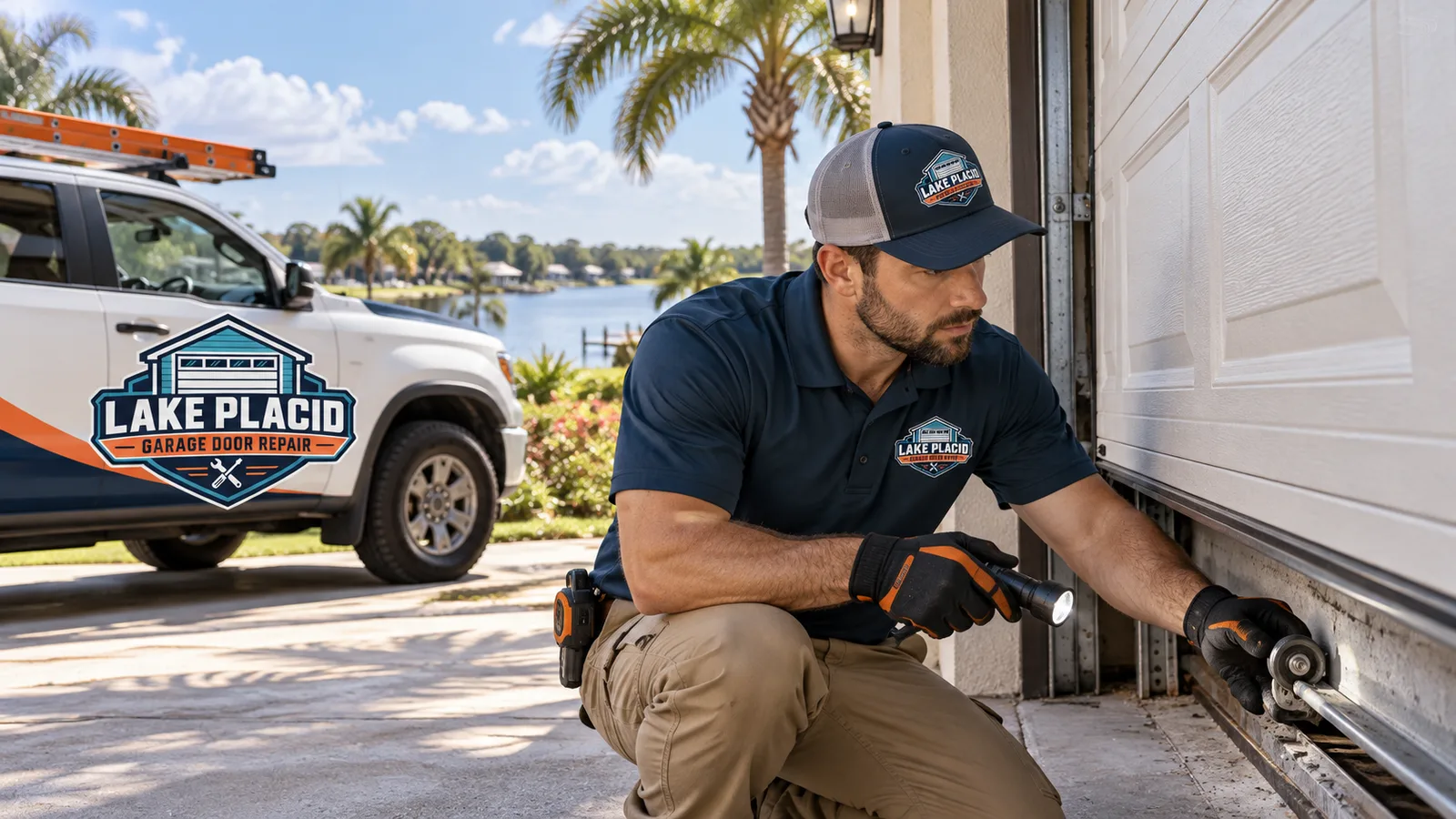
When a garage door will not open, will not close, or sits crooked in its opening, forcing it can make the damage worse. For emergency garage door repair in Lake Placid, FL, we repair broken springs, slipped cables, bent tracks, jammed rollers, damaged panels, opener faults, and doors that have come off track.
Start by keeping people, pets, and vehicles away from the door. Do not pull a loose cable, touch a torsion spring, or try to lift a heavy door by hand. If the door is partly open, avoid standing or walking beneath it. Disconnecting an opener does not make a door safe when its spring or cable system has failed.
The immediate goal is to identify what is holding the door, prevent an uncontrolled drop, and determine whether the system can be repaired safely. For nonurgent maintenance and general garage door repair in Lake Placid, the scope can be scheduled around access to the garage.
A sharp bang, a visible gap in a torsion spring, or a door that suddenly feels extremely heavy often points to spring failure. Springs store substantial energy and should not be loosened, wound, or replaced without the proper tools.
A door may lean, bind, or leave rollers outside the track after an impact or cable problem. Stop operating it. Continued movement can twist the track, damage panels, or allow the door to fall.
A cable hanging beside the door or unwinding from a drum can leave the door unevenly supported. Do not cut or pull it, even if it appears slack.
The cause may be mechanical, electrical, or both. A technician can separate opener trouble from a jammed door, failed spring, obstructed track, or damaged hardware.
A disconnected trolley, stripped drive component, broken spring, or door bind may be responsible. Repeatedly cycling the motor can add opener damage without moving the door.
A vehicle strike can bend tracks, shift brackets, crease panels, and disturb cable tension. The complete lifting system should be checked before the door is operated again.
Leave the door in its current position unless it creates an immediate threat to a person. Keep the wall control and remote controls out of use so nobody starts the opener by mistake. If you can reach the opener plug without going beneath a raised or unstable door, disconnecting power may prevent accidental activation. Do not remove hinges, bottom brackets, spring hardware, or track fasteners.
Florida thunderstorms can interrupt power and cause a powered opener to stop, but the manual release is not always appropriate. A balanced, mechanically sound door may be moved manually after release. A door with a broken spring can be unexpectedly heavy, and one with a loose cable may lift unevenly. If the garage is the only vehicle exit, keep clear of the door and arrange service.
If an automatic door reverses near the floor, clear obvious objects without moving the photo-eye brackets. Misaligned sensors can prevent closing, but a crooked door, grinding sound, or slack cable indicates a mechanical problem that needs inspection.
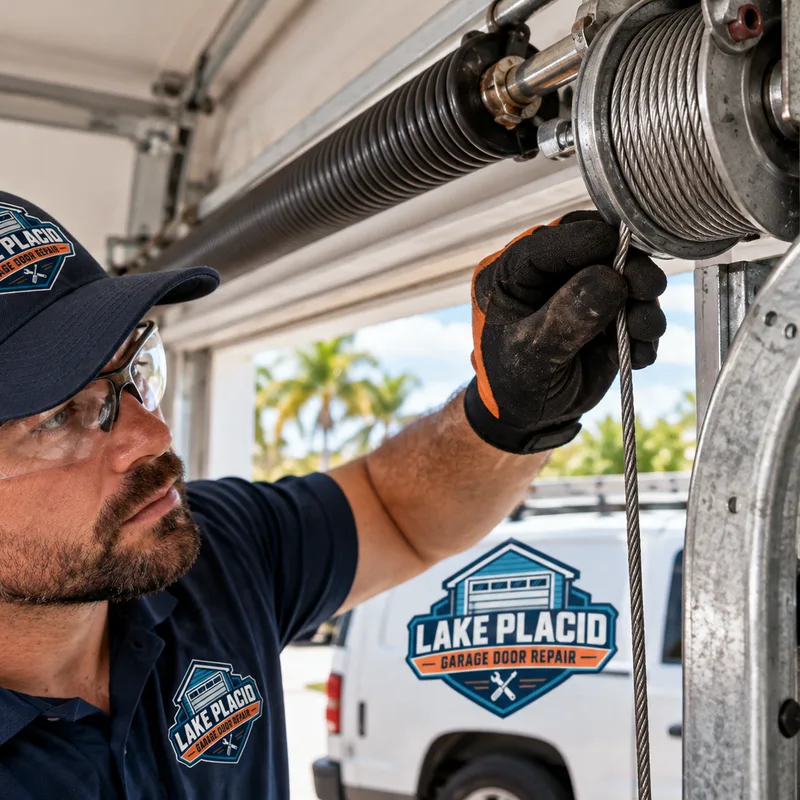
Step 1 of 4
We assess whether the door is open, closed, crooked, off track, or blocking a vehicle, along with any impact damage, loose cables, damaged panels, or opener noise.
Step 2 of 4
The technician checks the door position, spring system, cables, drums, rollers, tracks, hinges, brackets, panels, opener connection, and safety controls. The door should be stabilized before tensioned or load-bearing parts are handled.
Step 3 of 4
The findings determine whether adjustment, realignment, component replacement, or temporary securing is appropriate. Parts, access, and damage beyond the failed component can affect what can be completed during the visit.
Step 4 of 4
After the approved work, the door is cycled and checked for balanced travel, proper track movement, secure hardware, opener response, and safety-reversal operation. Any remaining concern should be identified before regular use resumes.
A leaning, hanging, or unusually heavy garage door should remain out of use until it has been inspected.
CALL NOW: (863) 592-2934
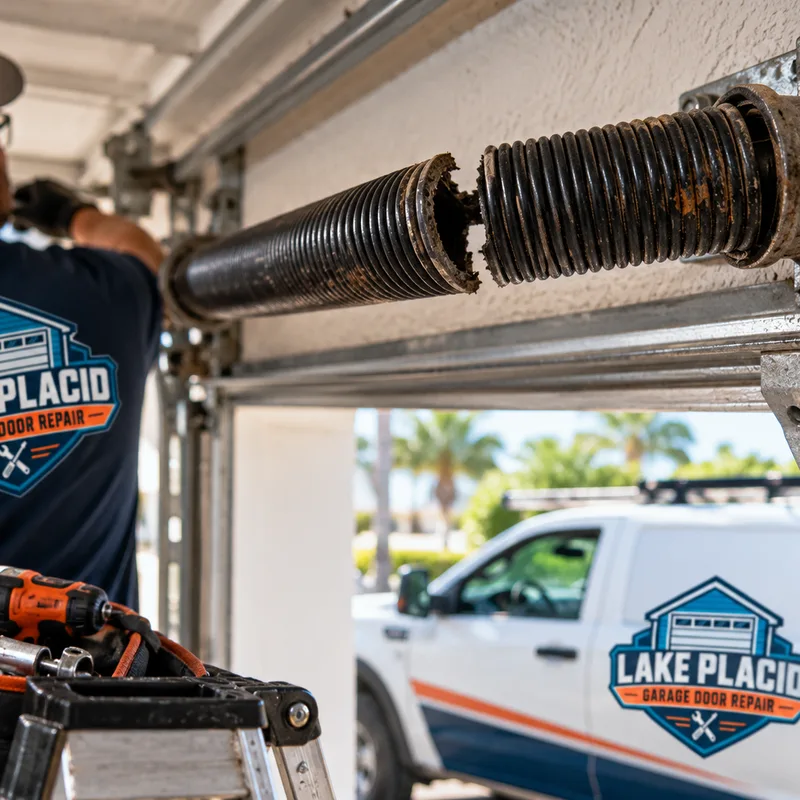
Do not try to open a garage door with a broken spring unless a qualified technician has assessed it. The door may be too heavy for safe manual lifting, and an opener is not designed to replace the spring's lifting force. Keep the door closed when possible and tell Lake Placid Garage Door Repair whether a vehicle is trapped inside.
Yes, an off-track door needs professional attention because it may be unevenly supported and could fall. Stop the opener, keep clear of the opening, and do not push rollers back into the track. Impact damage or a slipped cable may also need correction before the door can move safely.
A humming opener may have a motor or drive problem, but a broken spring or jammed door can also prevent movement. Stop repeated attempts if the door does not move. A technician should test the door independently from the opener and inspect the spring, trolley, drive system, tracks, and rollers.
A mechanically sound door may be operated manually after the opener is disconnected, but do not pull the emergency release if the door is crooked, partly open, unusually heavy, or supported by a loose cable. Power interruptions during Florida storms can stop an opener without damaging the door, so check the door's condition before using the manual release.
A complete repair depends on the damage, the required components, and whether the door can be restored safely during that visit. Some situations can be corrected with adjustment or common replacement parts. Severe track, panel, or structural damage may require the opening to be secured while the proper repair is arranged.
State whether the door is open or closed, whether it is level, and whether a vehicle or property is trapped. Mention any loud bang, vehicle impact, hanging cable, visible spring gap, damaged panel, flashing opener light, or grinding noise. Lake Placid Garage Door Repair can use those details to understand the likely hazard before service.
The correct choice depends on the spring setup, condition, cycle history, and whether the springs were installed as a matched pair. A technician should identify the spring specifications and inspect the other spring rather than assume it is suitable for continued use. The recommendation should account for balanced lifting force across the door.
Call to arrange an inspection of the door, spring system, tracks, cables, and opener.