Correct Spring Selection
Spring choice depends on door weight, height, track setup, wire size, inside diameter, and spring length. Matching those specifications is necessary for proper counterbalance.
Serving Lake Placid, Florida
Restore balanced door movement and address a broken, worn, or noisy spring before repeated operation strains other hardware.
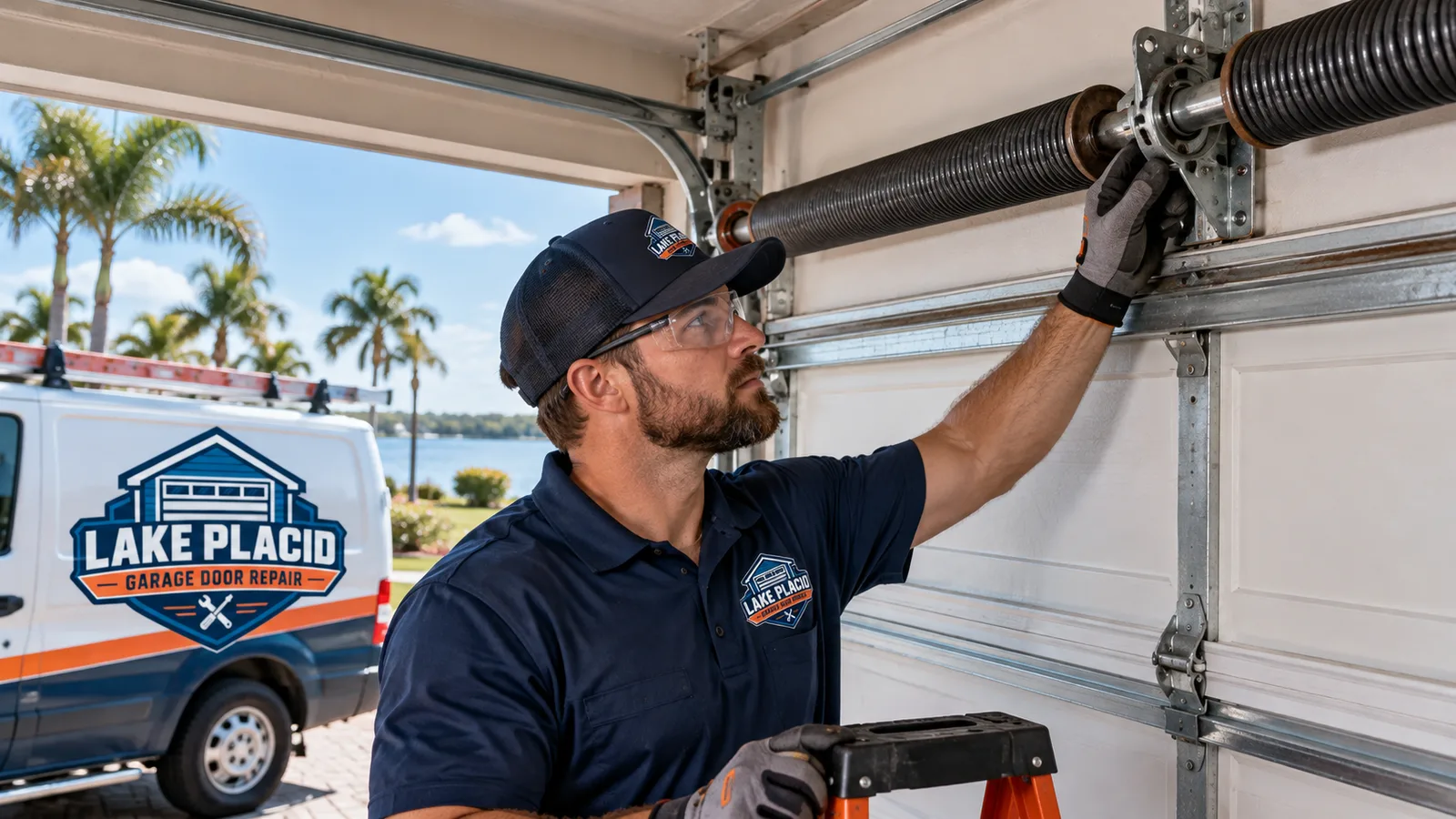
A broken garage door spring can leave the door too heavy for safe manual operation and too demanding for the opener. For garage door spring repair in Lake Placid, FL, we inspect the spring system, identify the correct replacement specifications, and check the door's balance after the work is complete. Avoid repeatedly pressing the opener or trying to lift the door.
Springs carry stored mechanical energy. A torsion spring is mounted on a shaft above the door, while extension springs run beside the horizontal tracks on systems that use them. Both types counterbalance the weight of the door. Replacement requires the correct tools, winding procedure, and spring selection. Improvised repairs can release that energy without warning.
Lake Placid's heat and humidity also make routine hardware inspection worthwhile. Steel components can develop surface corrosion, while worn bearings, rollers, hinges, or cables may add resistance that makes the spring system work harder. The spring should therefore be evaluated as part of the complete counterbalance assembly, not treated as an isolated piece of hardware.
A visible gap in a torsion spring coil is a strong indication that the spring has broken. With extension springs, a stretched, separated, or hanging spring is an equally clear warning. Other symptoms are less obvious: the door may rise several inches and stop, slam shut, sit crooked, feel unusually heavy, or make a sharp bang when the spring fails.
A door that opens unevenly may have a cable problem as well as a spring problem. Lift cables wrap around drums at the ends of a torsion shaft, and uneven cable tension can pull one side ahead of the other. Stop operating a crooked door because a cable may leave its drum or the rollers may bind in the tracks.
Noise alone does not confirm a failed spring. Squeaking can come from hinges or rollers, while grinding may point to a bearing or opener issue. A hands-on inspection separates normal hardware noise from a spring that is fatigued, corroded, incorrectly sized, or losing tension. For problems involving the opener, tracks, panels, or other components, garage door repair in Lake Placid can address the broader operating system.
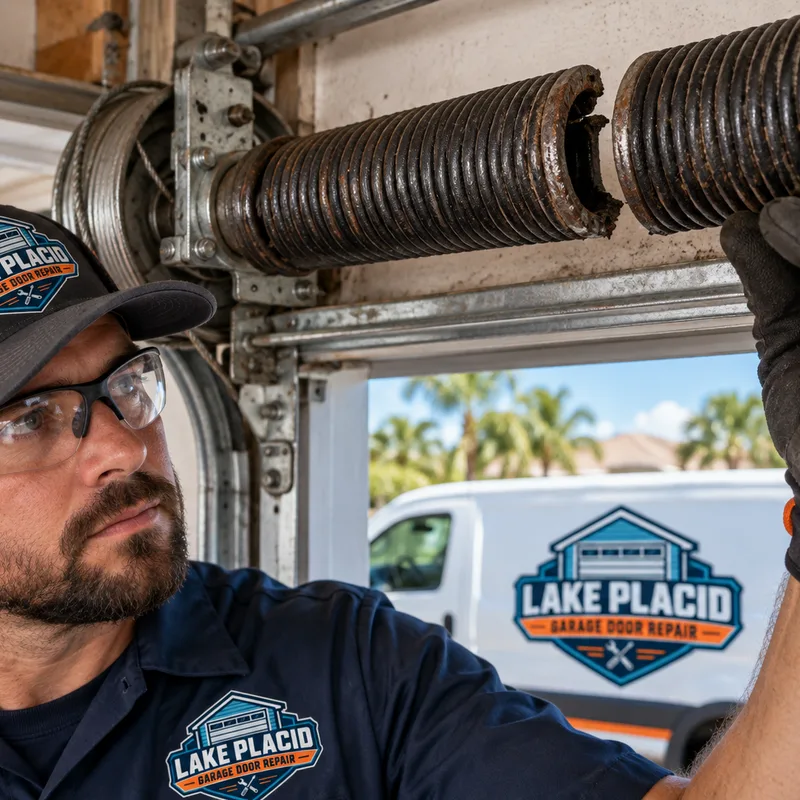
Spring choice depends on door weight, height, track setup, wire size, inside diameter, and spring length. Matching those specifications is necessary for proper counterbalance.
The repair method changes with the spring design. Torsion systems use a shaft and winding cones; extension systems use springs, pulleys, and safety cables along the tracks.
Related hardware is checked for fraying, wear, binding, corrosion, or movement that could prevent the replacement spring from operating correctly.
After spring tension is set, the door should move through its travel without one side racing ahead or the full weight transferring to the opener.
The opener is tested only after the door moves properly by hand. An opener guides a balanced door; it is not designed to lift a door with failed counterbalance hardware.
Set screws, fasteners, brackets, rollers, and tracks are reviewed for conditions that may affect movement after the spring work.
Step 1 of 5
Share what happened, whether the door is open or closed, and whether a spring, cable, or loose part is visible. Keep people and vehicles away from the door until it is assessed.
Step 2 of 5
We examine the spring arrangement, door weight and movement, cable position, drums or pulleys, shaft, bearings, tracks, and opener connection.
Step 3 of 5
The spring specifications and any related worn or damaged hardware are identified before work proceeds. If a paired spring system has one failed spring, the condition and cycle history of the other spring should be considered.
Step 4 of 5
The old spring is removed using procedures appropriate to the system. The replacement is installed, secured, and tensioned for the door rather than adjusted by guesswork.
Step 5 of 5
The door is moved manually to check balance and even cable travel. The opener, travel limits, and safety reversal are then checked under normal operating conditions.
The spring system offsets much of the door's weight so the door can move with controlled effort. When a spring breaks or loses tension, the opener may strain, stop partway, bend its rail, or damage the top door section. Reconnecting or repeatedly cycling the opener does not correct the underlying load problem.
A balance test helps verify the repair. With the opener disconnected under safe conditions, a properly adjusted door should move smoothly and remain reasonably controlled at intermediate positions. It should not race upward, drop hard, or pull sharply to one side. The test also reveals drag from rollers, tracks, bearings, or cables.
Spring adjustment is not suitable for casual do-it-yourself work. Torsion springs require winding bars that fit the cones, and extension springs can move forcefully if restraint and safety cables are not handled correctly. Do not loosen set screws, cut cables, remove bottom brackets, or attempt to wind a spring with screwdrivers or improvised rods.
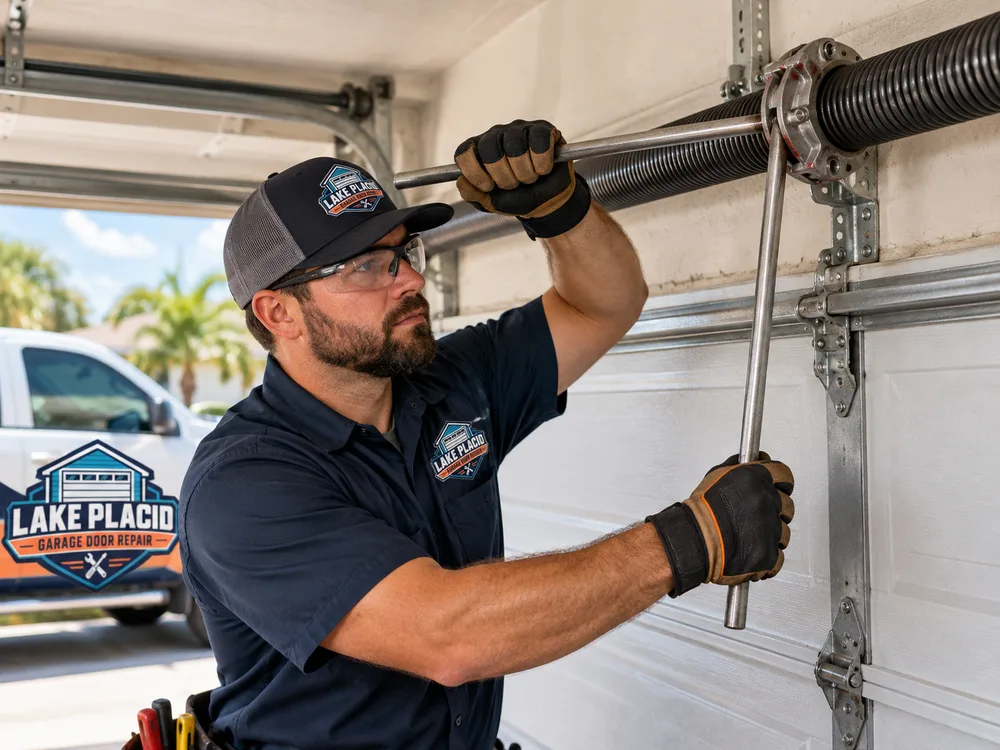
If the door feels heavy, hangs unevenly, or has a visible spring gap, stop operating it and arrange an inspection of the complete counterbalance system.
CALL NOW: (863) 592-2934Avoid operating a garage door with a broken spring unless a trained technician determines that it can be moved safely. The door may weigh hundreds of pounds, and the opener is not a substitute for the failed counterbalance system. If a vehicle is trapped inside, keep clear of the door and arrange service.
Replacing both is often reasonable when a matched pair was installed at the same time and one has failed, but the correct choice depends on the system and the condition of the remaining spring. Paired springs generally complete similar operating cycles. The technician should inspect the intact spring, identify its specifications, and explain whether replacing one or both fits the door.
The correct spring is selected by the door's actual weight and the spring system's specifications. For torsion springs, relevant measurements include wire size, inside diameter, spring length, wind direction, and number of springs. Door height and drum type also affect the required torque. Color alone is not enough to select every replacement accurately.
Early failure can result from an incorrectly matched spring, corrosion, excessive cycling, poor adjustment, binding hardware, or another component adding resistance. Central Florida humidity can contribute to corrosion on unprotected steel components. An inspection should examine the complete lifting system rather than replacing the broken part without checking why it failed.
Sometimes noise comes from dry coils, hinges, rollers, or bearings rather than a spring that needs replacement. Lubrication may reduce friction when the spring is structurally sound, but it cannot repair cracked, stretched, badly corroded, or fatigued metal. We identify the source and determine whether adjustment, maintenance, or replacement is appropriate.
Keep clear of visible spring gaps, loose cables, and uneven door sections. A photo taken from a safe distance may help identify the spring arrangement.
Call to arrange an assessment of the springs, cables, balance, and connected hardware.