A Roller Is Outside the Track
One or more rollers may sit beside the vertical or horizontal rail. The door can become unstable when its weight is no longer supported along the intended path.
Serving Lake Placid, Florida
Stop using a crooked, jammed, or hanging door. Lake Placid Garage Door Repair can assess the track, rollers, cables, and supporting hardware, then determine the right way to restore safe movement.
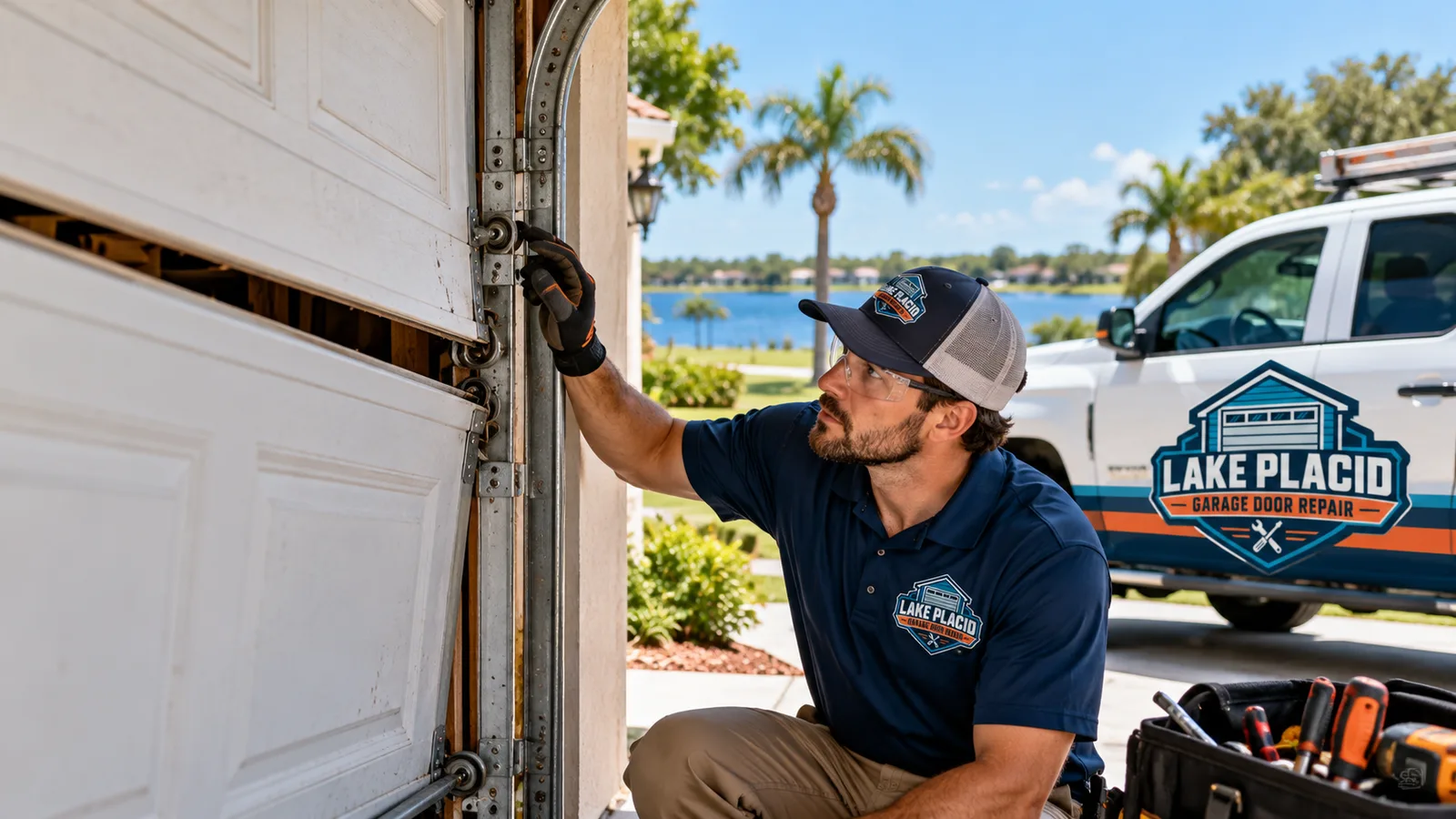
A garage door that has slipped out of its tracks can bind, tilt, scrape, or hang unevenly. Garage door off track repair in Lake Placid, FL starts with finding out why the door moved out of alignment. The cause may be an impact to the track, loose mounting hardware, a damaged roller, a cable problem, or an obstruction that forced one side of the door to travel differently from the other.
Do not keep pressing the opener if the door is crooked or a roller is outside the track. The opener is designed to move a balanced door along a clear path. Repeated operation can bend track farther, pull hardware from its mounting points, or leave more of the door's weight unsupported. Keep people, pets, and vehicles away from the opening until the system has been assessed.
We inspect the complete movement system rather than pushing a roller back into place and assuming the problem is solved. The tracks, rollers, hinges, cables, drums, brackets, and door sections all affect alignment. If the opener has also been strained or damaged, we address that issue after the door is mechanically stable.
Impact is a common cause. A vehicle, mower, stored item, or other object can bend a vertical track or shift its brackets. Even a small bend may narrow the roller path enough to make the door bind.
A roller can also leave the track when its stem is worn, a hinge is loose, or the track opening has spread. If a lift cable becomes slack, frayed, displaced, or broken, one side of the door may rise while the other side lags. That uneven load can pull rollers from the track and twist the door in the opening.
Lake Placid's humid, rainy climate makes routine inspection useful. Moisture and airborne debris can contribute to corrosion, dirty roller paths, and stiff moving parts, particularly around an opening exposed to wind-driven rain. Lubricant is not a repair for bent metal or damaged hardware, however. The cause must be identified before the door is tested under power.
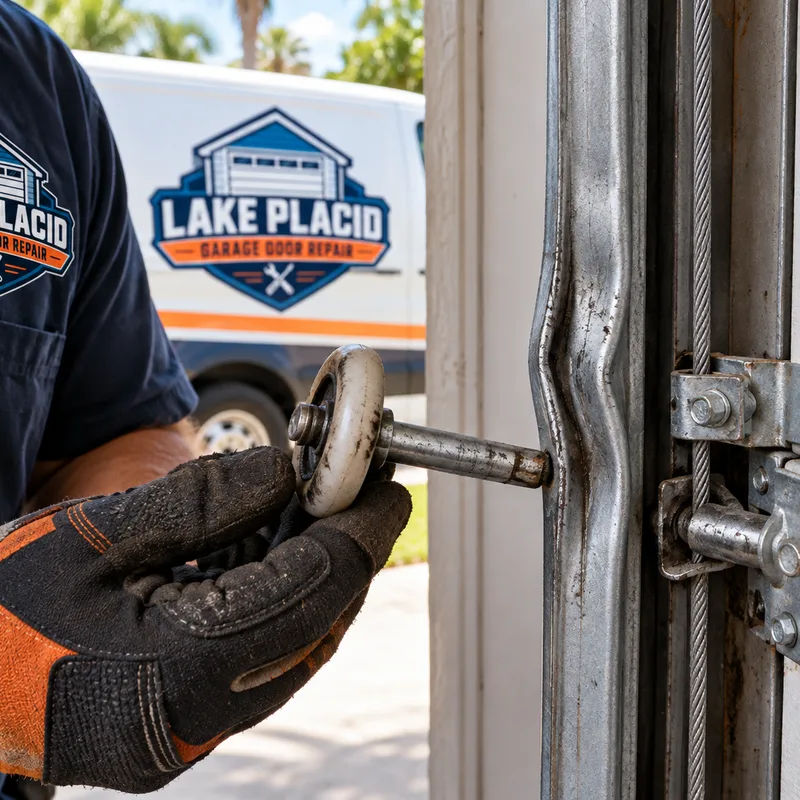
One or more rollers may sit beside the vertical or horizontal rail. The door can become unstable when its weight is no longer supported along the intended path.
A tilted door often points to unequal cable tension, a displaced cable, damaged hardware, or resistance on one side. Avoid standing beneath it.
A rail that is pinched, twisted, or pulling away from its brackets cannot guide the rollers correctly. Tightening hardware alone may not correct distorted metal.
Harsh noises and sudden stops can indicate roller interference, loose hinges, or a track joint that is out of line. Further operation may increase the damage.
Lift cables are under significant tension and work with the spring system. Do not pull, cut, or attempt to rewind a displaced cable.
After an impact, track alignment, brackets, rollers, panels, and cable position should be checked before the opener is used again.
Step 1 of 5
The first priority is controlling movement and reducing the chance that the door will drop or shift. A hanging door should be stabilized before hardware is loosened or adjusted.
Step 2 of 5
We check the vertical and horizontal tracks, roller condition, hinges, brackets, cables, drums, door sections, and opener connection. This distinguishes a simple alignment problem from damage involving the lifting system.
Step 3 of 5
Depending on the condition, the work may include realigning track, correcting bracket position, reseating or replacing damaged rollers, addressing displaced hardware, or replacing a track that cannot be safely straightened.
Step 4 of 5
The tracks need enough clearance for the rollers to travel without binding, while still keeping them properly captured. Track spacing, joints, bracket attachment, and fastener tightness are checked through the door's travel.
Step 5 of 5
After the door is back on track, manual movement is checked before powered operation. The final test looks for smooth travel, even cable behavior, secure hardware, and proper interaction with the opener.
A track that has shifted at its brackets may be suitable for realignment if the metal remains sound and the roller channel has not been sharply creased. Minor adjustment can restore the correct spacing and path, but the repair depends on the full condition of the rail and its mounting points.
Replacement may be the safer choice when a track is split, badly twisted, deeply creased, heavily corroded, or unable to hold its shape. The replacement must match the door configuration and roller system. Horizontal track also supports the open door, so damage near the curved transition or overhead supports requires careful evaluation.
A damaged panel can complicate the repair. If an edge, stile, or hinge mounting area has deformed, aligning the rail alone may not let the door travel correctly. We identify which components are preventing normal movement and review the repair scope before work proceeds.
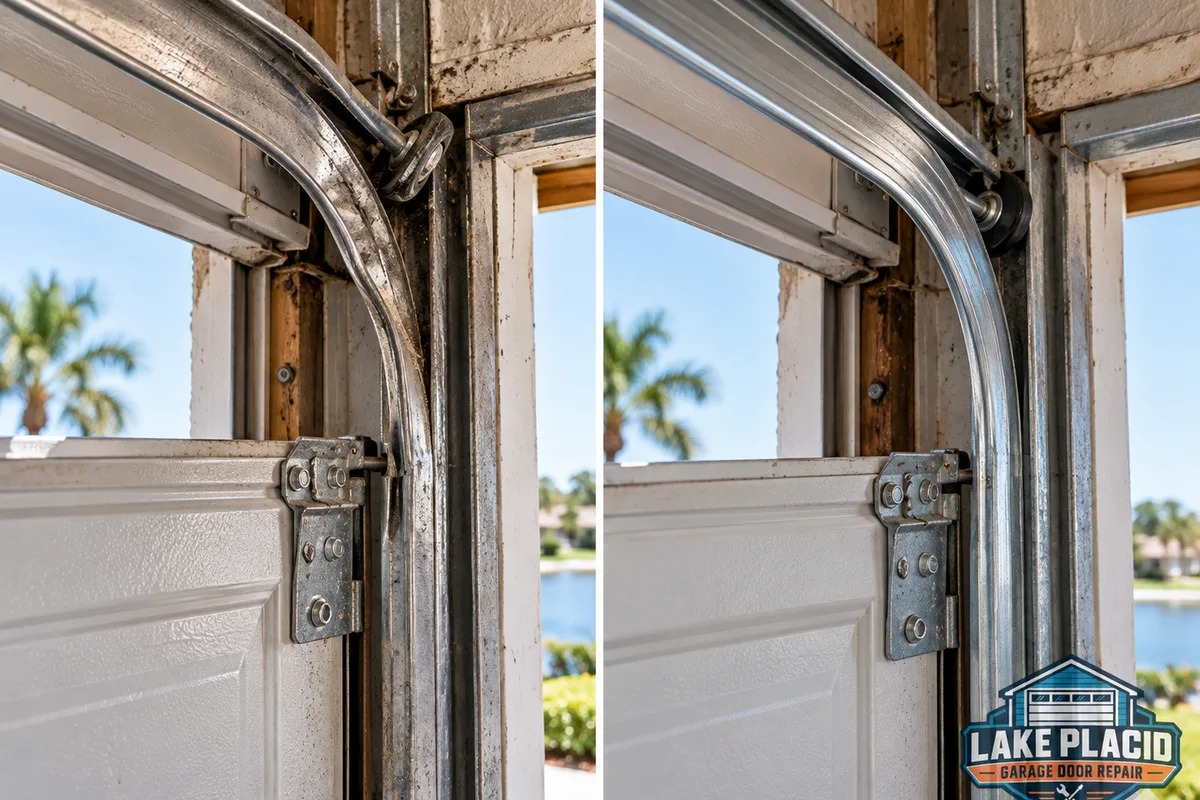
Leave the door where it is unless moving it is necessary to prevent an immediate hazard. Do not disconnect the opener while a crooked door is suspended overhead because the door may move unexpectedly. Avoid trying to force rollers into the rail with pliers, prying open the track, or loosening cable and spring hardware.
Clear a safe approach to the garage without walking beneath a hanging door. If the opening is exposed to rain, keep people away rather than trying to lower an unstable door. Take note of what happened before the problem appeared, such as an impact, a loud snap, a cable coming loose, or the door striking an object. Those details can help narrow the diagnosis.
We inspect whether the door is open, closed, or tilted, whether rollers are outside the rail, and whether a cable is hanging loose before confirming the repair method.
An off-track door can become less stable each time it moves. Arrange an assessment before operating the door again, and get a clear repair scope based on the track, rollers, cables, and supporting hardware.
CALL NOW: (863) 592-2934No, stop operating the door when any roller has left the track. One displaced roller can change how the load is carried and may cause nearby rollers, hinges, or track brackets to fail. In Lake Placid's frequent wet weather, protecting a vehicle or garage contents may feel urgent, but forcing the door closed can increase the damage.
Yes, many off-track conditions can be corrected without replacing the complete door when the sections, tracks, and lifting system remain repairable. Realignment may involve the track, rollers, brackets, or displaced hardware. A badly bent panel, torn hinge mounting point, or severe track damage can expand the scope, so Lake Placid Garage Door Repair inspects the full assembly first.
A cable may lose tension when the door becomes tilted, binds in the track, or stops unevenly. It may also be the original cause if it was damaged or displaced first. Because cables work with springs and drums under tension, cable position should be corrected as part of the mechanical diagnosis rather than treated as an isolated symptom.
Not automatically; replacement depends on the condition and compatibility of both tracks. If one rail has isolated impact damage, only that component may need replacement. Both sides still need inspection for matching geometry, secure brackets, proper spacing, and unobstructed roller travel.
An opener can contribute when force settings, travel limits, mounting, or the trolley connection are wrong, but many off-track failures begin with a mechanical problem. A door that binds, tilts, or has uneven cable tension should be repaired and balanced before opener operation is tested. An opener should guide movement, not overcome resistance.
Yes, attention is appropriate because an off-track door may shift, fall, or leave the garage unsecured. Keep the area clear and do not stand beneath a door that is hanging unevenly. If the door blocks a vehicle, report that condition when arranging service rather than trying to force it open.
Call to arrange an inspection of the tracks, rollers, cables, brackets, and door alignment.