Remotes and Keypads
Testing can determine whether the issue is a battery, programming loss, damaged transmitter, receiver problem, or keypad failure.
Serving Lake Placid, Florida
Restore dependable access with careful diagnosis of the opener, remotes, keypad, safety sensors, and door controls.
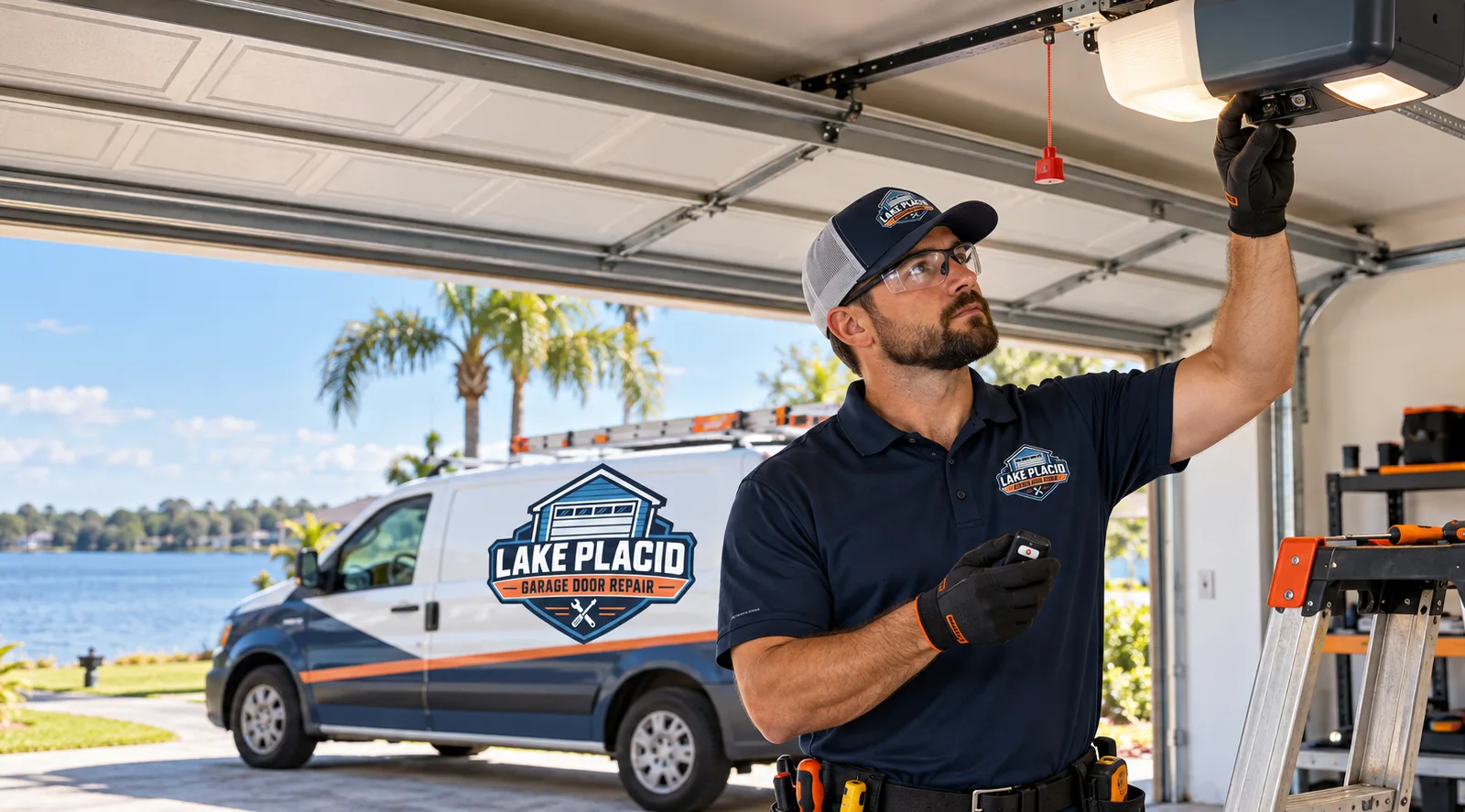
A garage door that will not respond can leave a vehicle trapped inside or prevent the home from being secured. We provide garage door opener repair in Lake Placid, FL for problems involving remotes, keypads, wall controls, safety sensors, drive systems, motors, and control boards. We identify the failed part rather than replace components by trial and error.
An opener problem does not always originate in the motor unit. A blocked photo eye, loose wire, lost remote programming, activated lock mode, interrupted power supply, or door that binds on its tracks can produce similar symptoms. A proper inspection separates an opener fault from a mechanical door problem. If the springs, rollers, cables, tracks, or panels need attention, broader garage door repair in Lake Placid may be the appropriate scope.
Central Florida heat and humidity can be hard on electronics, wiring connections, and battery-powered accessories. Thunderstorms and power interruptions can also affect settings or electronic controls. Diagnosis should account for those conditions without assuming that every failure requires a new opener.
When the opener hums but the door does not move, the cause may be a worn drive gear, a disconnected trolley, or a door that is too heavy for the operator to lift. If the motor runs while the chain, belt, or screw drive remains still, the drive assembly needs inspection.
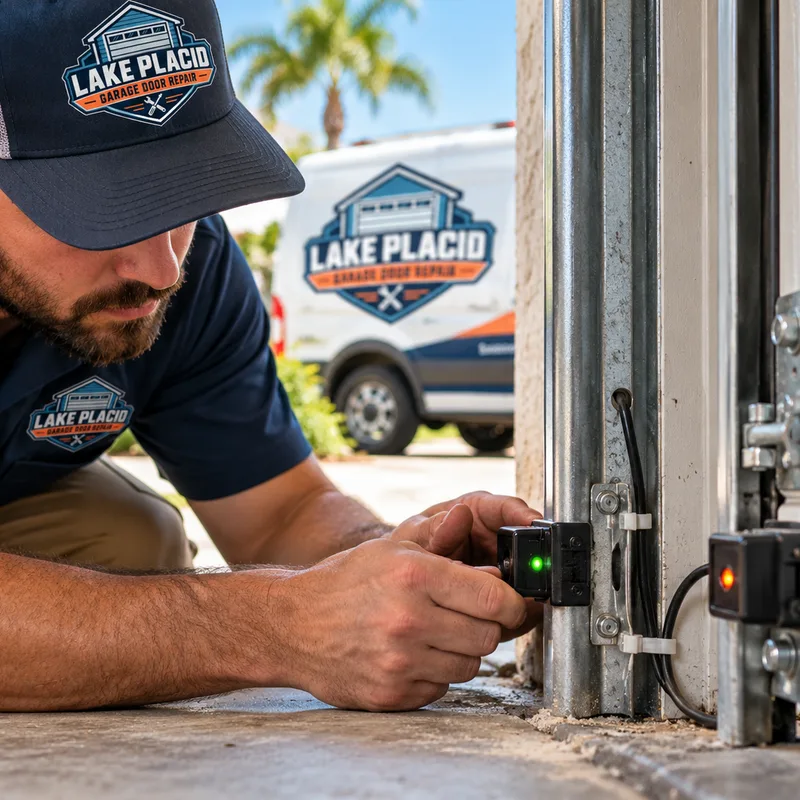
A door that starts down and immediately reverses often points to photo-eye alignment, dirty sensor lenses, damaged wiring, or an obstruction. The sensors are mounted near the bottom of the tracks and must face each other across the opening. Their indicator lights can help with diagnosis, but a lit indicator does not rule out an intermittent wire or bracket problem.
Remote-only trouble may involve batteries, programming, radio interference, or the receiver. If the wall control works but every remote has stopped, attention usually shifts away from the door itself. If neither the wall control nor remote works, power, wiring, lock mode, and the opener's logic board should be checked. We evaluate the complete operating sequence before recommending a repair.
Testing can determine whether the issue is a battery, programming loss, damaged transmitter, receiver problem, or keypad failure.
Photo eyes, brackets, lenses, wiring, and alignment are checked when the door will not close or reverses unexpectedly.
A dead or intermittent wall station may have a loose low-voltage wire, a failed button, or an issue at the motor unit.
Chains, belts, screw drives, trolleys, sprockets, and internal gears are inspected for wear, looseness, or breakage.
Power input, travel behavior, force response, motor operation, and control-board symptoms help identify an electronic or mechanical fault.
Incorrect limits can make a door stop short, press too firmly against the floor, or reverse before completing its cycle.
Step 1 of 5
We test the remote, keypad, wall control, indicator lights, and intermittent behavior.
Step 2 of 5
The door's balance and movement are considered along with the opener. A motorized operator should not be used to compensate for a binding door or failed spring.
Step 3 of 5
Power, wiring, remotes, limits, force response, photo eyes, and the drive mechanism are checked to isolate the fault.
Step 4 of 5
The recommended work depends on the failed component, the condition of the opener, and whether compatible parts are available.
Step 5 of 5
After repair, the door is cycled through opening and closing. Controls, travel limits, and the photo-eye reversal response are checked before regular use resumes.
Repair is often sensible when the opener has an isolated fault and compatible replacement parts remain available. A failed sensor, wall control, remote, trolley, gear, or capacitor may not justify replacing the entire unit. The condition of the door matters too. Correcting a mechanical problem can reduce strain on an otherwise usable opener.
Replacement may deserve consideration when an older unit has repeated electronic or drive failures, excessive noise, major internal damage, or unavailable parts. It may also be appropriate when the opener cannot reliably move a properly balanced door after its controls and settings have been checked.
The recommendation should follow diagnosis. We compare the repair scope with the condition of the existing equipment to determine whether another repair is reasonable. Until the cause is known, avoid repeatedly pressing the control. Continued operation can worsen a stripped gear, loose chain, damaged trolley, or binding-door problem.
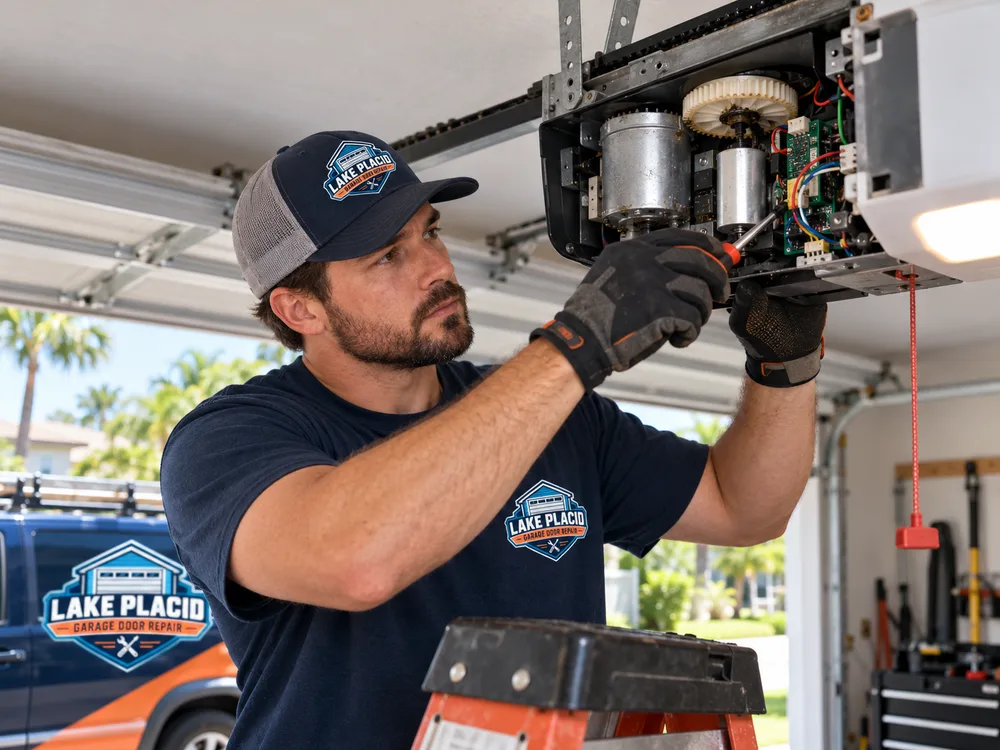
If the opener has become unreliable, arrange an inspection before repeated cycling causes more wear or leaves the door stuck at an inconvenient time.
CALL NOW: (863) 592-2934The likely causes are depleted remote batteries, lost programming, a damaged transmitter, radio interference, or a receiver fault. If every remote stopped at once while the wall control still works, the opener's lock setting and receiver should also be checked. Lake Placid Garage Door Repair can test the controls and determine whether reprogramming or component repair is needed.
A closing door commonly reverses because the photo eyes are blocked, dirty, misaligned, loosely mounted, or affected by damaged wiring. Travel or force settings and physical resistance in the tracks can cause similar behavior. The obstruction should be cleared, but safety sensors should never be bypassed to keep the opener running.
Yes, depending on the failed part and the condition of the door. A disconnected trolley, stripped internal gear, broken sprocket, loose chain or belt, or damaged drive component can let the motor run without moving the door. The door should also be checked for a failed spring or binding hardware before the opener is operated again.
Yes. A power interruption may clear remote programming or require the opener to reset, while an electrical surge can damage a control board or receiver. Central Florida thunderstorms can affect power input, stored settings, remotes, and the logic board, so we include those parts in the diagnosis.
Only pull the emergency release when the door is fully closed or securely supported. Releasing an open door with a broken spring or failed support component can allow it to fall. If the door feels unusually heavy, appears crooked, or has a loose cable, stop and arrange service rather than trying to lift it.
The opener is receiving at least some power, but the motor circuit, capacitor, control board, drive assembly, safety input, or door mechanism may still have failed. Light operation alone does not confirm that the opener can safely move the door. Testing the controls and checking the door by hand helps narrow down the cause.
Programming may be possible when the accessory is compatible with the opener and the receiver is working. The model, frequency, learn-button system, and condition of the existing controls determine compatibility. An inspection can distinguish a programming issue from a failed keypad, remote, or receiver.
Call to arrange an inspection of the opener, controls, safety sensors, and door movement.